What your client sees
A small agency runs several sites at once, and every one of them stalls the same way: waiting on a logo, a paragraph of copy, or a password nobody wants to type into an email.
You have four or five projects live at any time, and each one needs roughly the same things: logo, brand colors, homepage copy, opening hours, maybe an existing CMS login. None of that is hard to get in principle. In practice it's scattered across three inboxes, a shared Drive folder someone forgot to permission correctly, and a WhatsApp thread with a photo of a business card.
A project manager ends up doing the same unpaid work on every project:
None of this is billable. All of it delays the actual work.
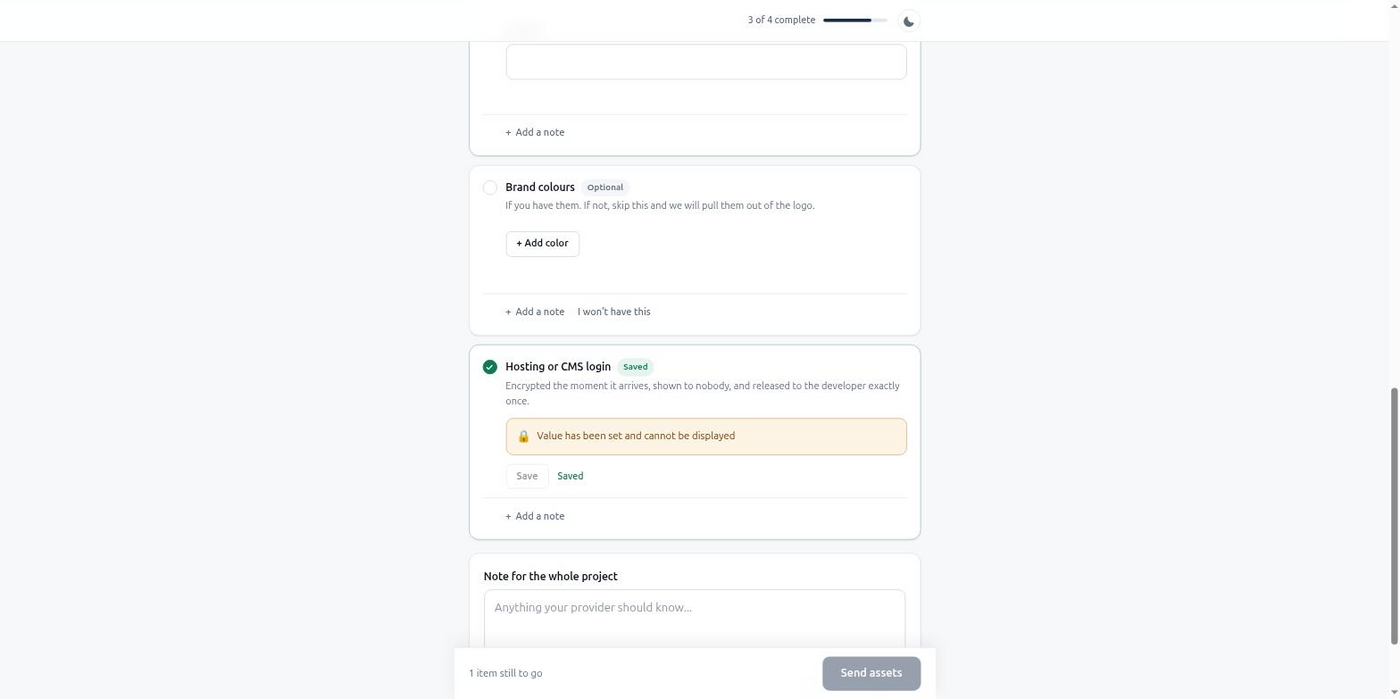
secret items, not as plaintext in an inbox — sealed on the server and revealed to your team exactly once.A project manager (or the coding agent building the site) starts a new engagement from the standard website template, adding one item specific to this client — a login for the site they're migrating from:
{
  "project_name": "Riverside Dental — Website",
  "client": {
    "name": "Anna Novak",
    "email": "[email protected]"
  },
  "template": "web-project-standard",
  "items": [
    {
      "key": "cms_credentials",
      "label": "Current hosting/CMS login (if migrating)",
      "type": "secret",
      "required": false
    }
  ],
  "chase_schedule": "default"
}
Every other item — logo, brand colors, hero copy, opening hours — comes from the template, so nobody retypes the same list for the fifth client this quarter. Once the client submits, get_intake_results returns files as signed URLs ready to fetch, plain text and structured fields as their typed values, and the CMS login decrypted exactly once — after that, calling it again returns null with a note that it was already revealed, so store it the moment it comes in.
Secret items and saved templates need the Solo plan or higher; the rest of this intake works on Free.
The item list gets defined once per project type, not once per client. Reminders go out on schedule without a PM writing "just following up" for the tenth time. Credentials stop living in email threads. When a client finally submits, everything the build needs is already typed and in one place, so the team picks up the project instead of waiting on a reply that may or may not include the right file.
Start free — one active intake, no card required — and see whether your next project starts with files instead of a follow-up email.
Free tier, no card required.